

Project Management In The Medical Device Industry
Project management (PM) is crucial in medical device development because the stakes are uniquely high. You’re not just managing scope and timeline, but also navigating strict regulatory standards, user safety, technical complexity, and market viability.
In this article, we break down what makes MedTech project management different from other industries, what a medical device PM is responsible for, the key elements and constraints that shape their work, and the most common ways projects go off track—and how to prevent them.
We share this from the perspective of a medical device design and development firm that builds devices for clients. Not only does the PM guide internal cross-functional teams, but they also manage the external client who owns the product. That added layer of coordination and accountability offers deeper insight into what it really takes to keep people aligned, anticipate risks early, and never lose sight of the end goal.
Whether you’re building a device internally or working with a partner, these lessons reflect the real-world challenges of medical device project management and what it takes to do it well.
What Makes Medical Device Project Management Different from Other Industries
When it comes to medical devices, you can’t just think about building and shipping a product; you have to feel truly confident putting it out into the world. Confident enough that your own family could use it without ever wondering if it might put a loved one at risk.
This moral responsibility means there’s much more emphasis on meeting regulatory requirements and documenting that you have done so. Every single step must be traceable, every risk must be assessed and controlled, and every requirement must be backed up with documentation. It’s not paperwork for paperwork’s sake; it’s about preventing harm to real people.
This is also why quality management takes on a completely different level of importance. Whatever you put out must be rigidly structured, thoroughly monitored, and held to standards that are far more stringent than in most other industries.
Furthermore, medical device development is incredibly complex technically. That’s why project management in the medical device industry requires a hybrid approach:
- Rigid where it matters, like in verification and validation phases, where traceability is crucial.
- Flexible where it doesn’t, especially earlier in the project when you’re prototyping, iterating, and pivoting based on new findings or challenges.
You want the ability to pivot technically or redesign if needed, so you can steer the project toward the most successful and safe outcome possible.
The Medical Device PM: Role, People, and Process
The Project Manager as a Conductor
The medical device project manager is like the conductor of a complex orchestra — or the choreographer of a meticulous dance — ensuring every performer knows when and how to step in.
At Cortex, that performance begins with good design. But it isn’t just about managing internal teams like design or engineering. It also means aligning with clients and coordinating external stakeholders: founders, physicians, technical teams, regulatory consultants, and clinical research firms.
What PM Isn’t – Misconceptions of Med Tech PMs
There’s a big misconception that project management is about keeping track of a timeline. Yes, the timeline is part of the role, but it’s far from the whole job.
Another misconception is that the PM is there to do admin tasks or micromanage people. But a PM shouldn’t need to micromanage; there should be a level of trust that everyone is doing excellent work.
In reality, the PM is responsible for making sure the entire project is successful. Good project management is about supporting people so they can do their best work. The focus is on making sure the project is well-supported, properly resourced, and able to move through challenges. When problems arise, the PM is the one who catches them and keeps the project moving forward.
At Cortex, the real goal of the PM is simple: deliver what we said we would, and do it exceptionally well.
Enabling Cross-Functional Collaboration
To make a medical device project successful, a PM’s key role is to encourage collaboration between people with different disciplines and skill sets. But the success of that collaboration largely depends on the company culture.
At Cortex, for example, the team is fully invested in each other’s work and projects. Not everyone works on every project, but people step in when needed and take ownership when something must move forward.
When the culture is strong, cross-functional collaboration comes naturally. People aren’t siloed the way they might be in larger companies. Instead, the work feels shared, which makes the PM’s job much easier.
Managing Clients with Clarity and Transparency
At Cortex, the PM communicates with clients on a daily basis because client relationships are a core priority. We share the same goal, after all: building a successful medical device.
The PM keeps every active client informed at each stage, making sure they understand risks, timeline expectations, and the reasoning behind key decisions. Depending on the project, clients may even participate directly in those decisions.
By keeping communication clear and consistent, the PM ensures clients have full visibility and full confidence in the project.
Design Controls and Cross-Functional Responsibility
Design Controls as a Shared Framework
In medical device development, design controls are a shared framework. Each team member is responsible for their own part of the work and for defining how that work gets carried out.
That being said, design controls are cross-functional by design; team members also have the opportunity to review and contribute to work outside their discipline. For example, a mechanical engineer might review an electrical design, and vice versa.
This approach ensures not only traceability and accountability, but also better-designed devices: more perspectives, fewer assumptions, and stronger collaboration from the start.
Design Controls Start with People
On medical device projects, everyone is aware of how critical design controls are, but that awareness starts with company culture.
You can document and dictate a lot of things, but at the end of the day, it comes down to people. Everyone on the team should feel responsible for the value they bring to the product. At the same time, you want dedicated experts watching the details: the risks, the requirements, and whether you can actually verify what you’ve set out to do.
Medical device project management, like any kind of management, comes back to people. You need a strong team that’s passionate about the work and deeply committed to safety, quality, and design controls.
The Core Elements of Medical Device Project Management
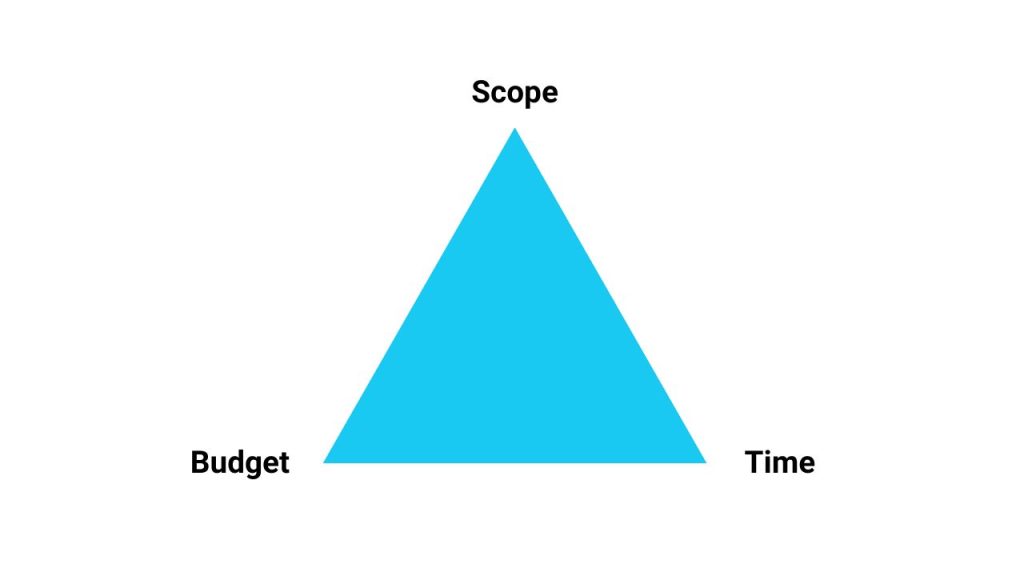
The main elements are similar to all types of projects — scope, time, and budget. But in medical devices, it’s the way they are carried out that is different.
Scope
Handling Scope on Client Projects
At Cortex, a partner that builds medical devices for companies and startups, deliverables are clearly defined before a project starts. Expectations are discussed, and a scope is outlined.
But things rarely go perfectly the first time around. In complex medical device development, it’s almost always the case that something unexpected will come up — whether it’s a technical barrier or an unforeseen regulatory consideration.
When that happens, we ask the essential question: Can we still fulfill what was promised with the resources we have? If the answer is yes, we adjust and keep moving. If not, we reassess and figure out how the project can move forward.
Guiding Clients When the Scope Is Unclear
As a company helping founders build medical devices, we often work with clients who are going through the development process for the first time. The steps involved can feel unfamiliar, unnecessary, or even overwhelming at first.
Depending on where they are in their journey, they need to have at least a partial sense of what they’re asking for. But sometimes their honest request is:
“We don’t really know what we want to do yet — we’re still figuring it out.”
In those cases, since it’s hard for us to define a concrete scope right away, we start by offering targeted services we can deliver within a given scope. From there, we work with the client to build clarity and develop a more complete timeline and product pathway.
Once we reach that point, it becomes much easier to figure out timelines, next steps, and how to plan for an FDA submission or other regulatory goal.
Adjusting Scope for Business Reality
As a PM, you may sometimes need to interrupt the team mid-project. That’s because not every client needs a perfect, complete product right away. Sometimes, they just need something good enough to get them to the next stage — like securing funding.
In those situations, the PM needs to tighten the scope to get things done faster, and make sure the team understands this is a phased approach: the version we’re building now is “done for now,” and there’s a longer-term roadmap we’re still aligned on for the future.
Managing Changing Requirements in Medical Device Projects
It’s easy to design to a fixed set of requirements, but in medical device development, you rarely start with a complete list, and requirements often evolve. That kind of ebb and flow can affect the predictability of your deliverables.
As a PM, your job is to stay anchored in the ultimate goal, which is to create a device that solves a specific task. Everything in between is “figure-outable”. You bring the right people together, surface the question marks, and chip away at them as the project moves forward.
For example, the industrial design team might take a very conceptual approach in the early stages, which allows space for exploration. Some things should be nailed down earlier if they’re hard requirements, like safety constraints. But others — like how the device displays information to the user — can take more time and validation.
Those open questions often lead to gathering customer feedback, which is something we value highly at Cortex. We love understanding where people are coming from, what their core needs are, and using that input to refine the product.
Turning “Blue Sky” Ideas into Regulated Devices
In “blue sky” projects (very exploratory projects), you may not know what you’re building yet, but you do know the problem you’re trying to solve. At the same time, medical devices are highly regulated, and you must follow. The challenge is that being too prescriptive can limit innovation and prevent you from creating a product that truly resonates in the market.
As a medical device project manager, you have to navigate that balance where the fuzziness of an opportunity becomes a regulated, tested medical device ready for market. The PM gives the team the room to push boundaries and explore new ideas. After all, no one makes a great medical device by playing it safe — you need space for creativity to make something remarkable.
But once that creative phase reaches a strong direction, a good PM knows how to bring just enough structure — organizing the team through design, development, verification, and validation — until the idea becomes ready to submit.
Timelines
Structuring a timeline for a medical device
Structuring a timeline for a medical device project is one of the most challenging parts of being a PM—especially because there are so many ways a project can unfold.
That’s why it’s important to learn from the past. At Cortex, our deep bank of real data from previous projects gives us a sense of rhythm for different project types and helps us build smarter, more informed timelines going forward.
When a new project arrives, the PM starts by assessing technical feasibility and common whole-team insights, such as risk level and market fit, to form an initial sense of the timeline. But when it comes to actually structuring the timeline, the PM should lean on comparable past scopes, reviewing how long each stage took — from concept ideation and engineering to prototyping, production, and verification and validation.
The phase of verification and validation is one that always takes longer than expected, which is why it needs extra scrutiny during planning. One tricky part is that you often start without a full list of design control deliverables. You may have a strong estimate based on historical data, but in medical device development, unknowns always surface.
That’s why risk thinking also informs your timeline. You build with an idea of where the project is able to best get to, but you also include a buffer for challenges. For example, maybe the team starts by pursuing a specific technical route, realizes a significant issue, and has to pivot quickly into a better solution. In those moments, the PM’s job is to:
- Pull the right people into the new direction
- Rework the path forward as efficiently as possible
- Shrink the timeline where you can, knowing that verification and validation are always top of mind as you push through
Managing Timeline Shifts with Transparency
Timelines are hard to determine in a medical device project, especially when you’re building something new. But one thing is certain: clients should never be surprised by the timeline. When time expectations aren’t met — or worse, were never properly set — clients can get very uncomfortable.
Risks will come up and should always be addressed as quickly as possible, but when that isn’t possible, you need to:
- Have a backup plan (risk mitigation strategy)
- Track timeline changes as the project moves forward
- Communicate to all stakeholders so they understand why timelines have shifted
When a timeline change does happen, it should always be a collaborative decision — one where everyone understands the “why” behind the extension and feels confident that the pivot protects both the project and the product.
Case Study: Saving Time (and Cost) with In-House Solutions
During a recent project at Cortex, the PM discovered that outsourcing a specific phase of testing to an external lab would significantly delay the project.
Instead of accepting the delay, the PM brought the issue back to the team. Together, they found a better solution that made sense for the company and benefited the client: bringing the necessary testing equipment in-house. In the end, the decision saved not only time but also cost.
Though guided by the PM, that kind of creativity came from the entire team, which prioritizes delivering the best for the client. At Cortex, we’re always looking for ways to accelerate work without compromising quality — whether that means finding smarter tools, building internal capabilities, or rethinking the plan to deliver better outcomes.
Budget
Budget vs. Timeline — Which Drives What?
In medical device development, budget and timeline feed off each other. The longer a project goes on, the more overhead you accumulate and the more it costs.
When you’re thinking about budget in medtech, you’re trying to get things done as fast as possible. Budget is the lifeblood of the company. They want that FDA submission in as soon as possible so they can get their device approved and funding in the bank.
At Cortex, we manage both by working as efficiently as possible, making sure every dollar we spend actually moves the project forward, and always looking for ways to shorten the timeline without compromising quality.
Balancing regulatory compliance with commercial viability
“Safe and effective” is the lowest bar in medical device development, but as a project manager, you should also consider its commercial success.
“How will the user interact with the device? Is it a positive or negative experience? How can you make it as positive as possible?” Even in potentially stressful or emotional situations, you want the device to feel friendly, intuitive, and supportive — not cold or intimidating. A great medical device isn’t just one that works. It’s one that people feel comfortable using.
Risk Management in MedTech PM
It’s easy to make changes at the beginning of a project, but the longer you wait, the harder and more expensive those changes become. As a PM of a medical device project, your goal is to tackle the riskiest parts as early as possible — fail fast, learn quickly, and keep momentum moving toward a stronger end product.
But some risks will always remain, so you should continue to monitor them and have steps in place to control them. For example, if there’s a long lead-time item required, the PM might recommend ordering it much earlier or monitoring it regularly. Even if it’s less convenient internally, it’s the best move for the client and the timeline. In short: PMs don’t just manage the plan — they manage the risk that threatens the plan.
Common Ways a Medical Device Project Can Go Wrong If the PM Isn’t Done Well
Failing to Navigate Between the Creative and Engineering Teams
A medical device project can go wrong when different disciplines aren’t aligned properly. Naturally, creative teams and engineering teams don’t always think alike; one is driven by aspiration, the other by structure. When they’re at odds, the PM should know how to balance them without losing momentum.
For example, if a client is unsure which approach to take on a certain project, an engineering mindset might aim to simplify and restrict it, while someone from the creative side might push for a broader and more ambitious outcome. The role of a strong PM is to keep both aligned while asking the most important questions:
- Are we building the right thing?
- Are we building it the right way?
- And are we building it at the right time?
That means knowing when to lean on each specialty:
- Need something that makes a user feel confident and delighted when looking at it? → Lean on the creative team
- Need to guarantee something doesn’t break or fail? → Trust the engineers
At Cortex, we believe design and engineering shouldn’t compete — they should elevate each other. In fact, that’s why Cortex was created: to elevate the practice of industrial design through engineering rigour, and to use design to elevate engineering.
“The goal is to bring those two together so that the aspirational can be brought into practice — and that the practice can be aspirational.”
Not Keeping Your Eyes on the Prize
Bad project management is when you stop focusing on the bigger picture and instead treat the work as just a checklist of tasks. But what’s the actual end goal?
The medical device project manager’s role is to keep the bigger picture visible, which benefits the entire team. The PM helps everyone understand best practices and how to play their role strategically.
A great PM always asks:
- What’s really important for the team right now?
- What should we prioritize today – and in the next few days?
When everyone is focused meaningfully on their most important task, they push toward the main goal faster and more effectively.
The Evolving Role of AI in Medical Device Project Management
AI is everywhere, including in project management, and for many PMs, it can be a powerful productivity tool. Everyone uses AI differently, but here’s how AI can help PMs today:
- Processing and synthesizing complex information
- Compiling reports and status updates
- Helping identify general trends and behavioural shifts in projects
- Capturing and formatting the current state of events
But remember that AI is just a tool. Whatever AI outputs, give it scrutiny. It’s important to always verify that what it suggests or summarizes is accurate and relevant. At Cortex, curiosity is high, but guardrails are always in place. The PM should always bring the human touch of judgment, context, accountability, and the “special sauce” of strategy and insight.